



You’ve started Mounjaro, perhaps feeling hopeful about your blood sugar or weight-management plan. Then, a day after your injection, your stomach feels unsettled. Food suddenly seems less appealing, or you’re wondering whether the nausea is something you should just put up with.
It’s a reasonable worry. When someone asks me, “Is this normal, or should I stop my injection?”, I want to know two things first: how severe is the symptom, and can you still drink, eat and go about your day safely? The answer matters much more than whether the symptom appears on a long list of side effects.
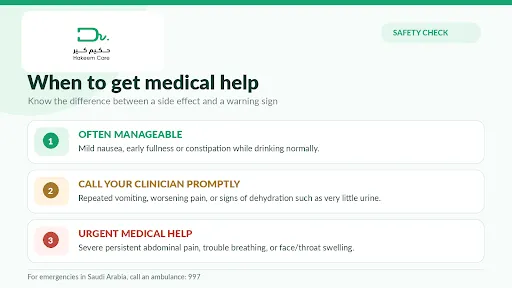
Here’s the short answer: nausea, diarrhea, constipation, vomiting, reduced appetite and abdominal discomfort are among the common Mounjaro side effects. They often appear when treatment begins or a dose increases and may ease as your body adjusts. Severe, persistent abdominal pain, repeated vomiting with dehydration, or swelling of the face or throat are different: those need prompt or emergency medical attention.
This guide explains what you can reasonably manage at home, what deserves a call to your prescriber and when you should not wait. It is written for adults receiving care in Saudi Arabia, where Mounjaro KwikPen is a prescription medicine registered with the Saudi Food and Drug Authority (SFDA).
Table of Contents
Why does Mounjaro cause stomach-related side effects?
Mounjaro contains tirzepatide, a medicine that works on two gut-hormone pathways known as GIP and GLP-1. It helps regulate blood glucose and can reduce appetite and increase the feeling of fullness. It also slows the rate at which food leaves your stomach. That last effect helps explain why a meal that once felt ordinary may suddenly feel too large.
Mounjaro is given as a once-weekly injection. Depending on a person’s condition and the locally approved product information, a clinician may prescribe tirzepatide for type 2 diabetes or weight management. It is not a medication to start simply because someone else has lost weight with it. The Mounjaro KwikPen listing in the Saudi SFDA registry confirms that the Saudi product requires a prescription.
Slower stomach emptying is part of how the treatment works, but it can also contribute to nausea, belching, indigestion or a heavy feeling after meals. Knowing that mechanism can help you make gentler food choices without assuming that every uncomfortable sensation means the medicine is dangerous.
What are the most common Mounjaro side effects?
The Saudi SFDA medicine information describes nausea and diarrhea as very common effects. Constipation, vomiting, indigestion, abdominal pain and reduced appetite are also reported. The latest manufacturer-submitted Mounjaro label and NHS patient guidance on tirzepatide describe broadly similar patterns.
For patients, the useful question is not only “Which symptoms happen?” but “What do they mean for me today?” A little nausea after a meal is different from being unable to keep a glass of water down. Mild constipation is different from severe bloating, vomiting and increasing abdominal pain.
Nausea and feeling full too quickly
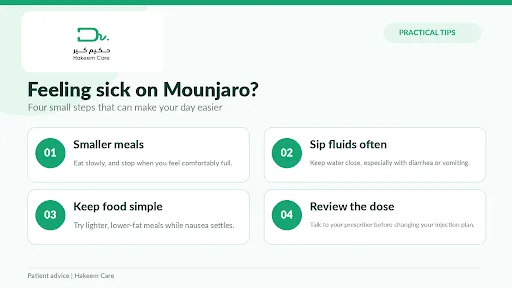
Mild nausea is particularly common after the first doses or when the dose is increased. You might notice it when you smell food, eat quickly or try to finish the portion you used to eat. Try smaller meals, eat slowly and stop when comfortably full. You do not need to force yourself to clean your plate.
During a difficult day, plain, lower-fat foods may be easier to tolerate than rich or greasy meals. Some people prefer toast, rice, soup or a small portion of familiar food. The goal is to keep eating and drinking adequately, not to follow an unnecessarily strict “Mounjaro diet.” If the nausea prevents normal meals for more than a short period, tell your clinician.
Diarrhea or vomiting
Diarrhea can be inconvenient; repeated vomiting can become risky, particularly when fluid intake is poor. Take small, frequent sips of water or another suitable fluid. If you have significant fluid loss, ask a pharmacist or clinician whether an oral rehydration solution is appropriate for you, especially if you have diabetes, kidney disease or fluid restrictions.
In Saudi Arabia’s heat, it may be easier to become dehydrated when you are already losing fluid. Watch for dark urine, peeing much less often, increasing dizziness or unusual weakness. If you cannot keep fluids down, do not wait several days to see whether it passes. Seek medical advice urgently because dehydration can affect kidney function.
Constipation, bloating and indigestion
Constipation can occur as eating patterns and gut movements change. If you are comfortable and otherwise well, regular fluids, gentle activity and appropriate dietary fiber may help. But increasing fiber too suddenly when you are already bloated can make you feel worse. A pharmacist can advise whether a short-term constipation treatment is suitable.
Burping, reflux or a lingering full feeling can also be unpleasant. Smaller evening meals and avoiding lying down immediately after eating may help. If you have severe abdominal pain, a swollen abdomen with vomiting or cannot pass stool or gas, seek urgent evaluation rather than treating it as ordinary constipation.
Fatigue, injection-site reactions and hair shedding
Some people feel tired or notice mild redness or irritation where they inject. Rotate injection sites as instructed in your product leaflet, and do not use a pen that has been damaged or share it with anyone. Hair shedding can occur during treatment, sometimes alongside substantial weight loss or reduced nutritional intake. It should not automatically be blamed on the injection without considering other causes.
Persistent fatigue deserves a closer look at nutrition, hydration, sleep and—if you have diabetes—blood glucose readings. If you are eating so little that you struggle to function, mention that at your next review rather than assuming less food always means better results.
Do side effects get worse after a Mounjaro dose increase?
They can. Digestive effects are often more noticeable when treatment starts and after dose escalation. Many patients improve with time, but there is no promise that everyone will tolerate every dose equally well. A higher dose is not automatically the right next step just because a calendar date has arrived.
Your prescriber chooses the starting dose and any later increase based on the approved product instructions, your response and your symptoms. Never increase the dose early, change the number of injections or use extra medication to compensate for a missed dose. If you are still struggling with nausea or vomiting, contact the prescribing team before your next scheduled increase.
A useful habit is to keep a simple note of the injection date, dose, meals, symptoms and whether you could drink normally. This gives your doctor something concrete to assess. “I was nauseated for two days but could drink and eat small portions” leads to a different conversation from “I vomited repeatedly and hardly passed urine.”
Four practical ways to ease mild Mounjaro nausea
Small, realistic changes can make the early weeks more manageable. Eat a little less at one sitting, give yourself time between bites, keep fluids available throughout the day and choose simpler meals when your stomach feels sensitive. You can still enjoy familiar Saudi foods, but a smaller portion of a rich rice or meat dish may sit better than forcing a heavy plate when you already feel full.
Do not treat severe symptoms with endless home remedies. If your intake is falling, the vomiting keeps coming back or you are tempted to skip or change a dose because you feel unwell, speak with your prescriber. Managing a side effect is part of good treatment; silently enduring it is not a requirement.
Which Mounjaro side effects need urgent medical attention?
These problems are less common than routine digestive discomfort, but they are important to recognize. Your body does not have to “get used to” severe pain or dehydration. If you notice any of the following, prioritize assessment rather than waiting for the next routine follow-up.
Severe, persistent abdominal pain: possible pancreatitis
Strong abdominal pain that does not settle, particularly if it spreads to your back, can be a warning sign of pancreatitis (inflammation of the pancreas). Vomiting may or may not occur. Stop using tirzepatide and seek urgent medical care if pancreatitis is suspected; the treating clinician will decide whether it can ever be restarted. The Saudi SFDA medicine information specifically addresses this risk.
Upper abdominal pain with fever or yellowing: possible gallbladder disease
Gallstones and gallbladder inflammation have been reported during tirzepatide treatment. Persistent pain in the upper abdomen—especially on the right—with fever, vomiting or yellowing of the skin or eyes needs prompt medical assessment. Do not assume it is simply heartburn from eating too much.
Dehydration and possible kidney problems
Repeated vomiting or diarrhea can reduce the fluid your body needs. If you cannot keep drinks down, feel faint, or are passing very little urine, arrange urgent medical evaluation. This is particularly important if you have existing kidney problems, are older or take other medicines that affect fluid balance.
Low blood sugar when combined with some diabetes medicines
Mounjaro can increase the risk of hypoglycemia if taken with insulin or a sulfonylurea such as gliclazide or glimepiride. Sweating, shaking, sudden hunger, palpitations, confusion and dizziness can be warning signs. If you monitor blood sugar, follow the low-glucose action plan your diabetes team has given you. Severe confusion, collapse or inability to swallow safely is an emergency; do not give food or drink by mouth to an unconscious person.
Serious allergic reaction
Difficulty breathing, swelling of the lips, tongue or throat, or sudden collapse after an injection needs emergency help. In Saudi Arabia, call 997 for an ambulance, or follow the emergency service guidance appropriate to your location. Do not rely on an online consultation for symptoms that could threaten your breathing.
Who needs extra caution before or during Mounjaro treatment?
Pregnancy, contraception and breastfeeding
Tirzepatide should not be used during pregnancy because safety concerns remain. Contact the treating clinician if you become pregnant or plan to conceive, so you can discuss the safest treatment plan. If you are breastfeeding, seek individual advice because the evidence and decisions depend on your situation.
There is a practical contraception issue that is easy to miss: Mounjaro delays stomach emptying and may make oral hormonal contraception less reliable when treatment starts or the dose increases. Current prescribing information advises using a non-oral contraceptive method or adding a barrier method for four weeks after starting treatment and for four weeks after each dose increase. For a longer, Saudi-focused explanation, Hakeem Care also has an Arabic guide to Mounjaro and birth control.
Thyroid history, severe digestive disease and anesthesia
Tell the prescriber if you or a family member have had medullary thyroid carcinoma, or if you have multiple endocrine neoplasia type 2 (MEN2). The current US label lists these as contraindications and explains that thyroid C-cell tumors occurred in rats, while the relevance to humans is unknown. This is a reason for a careful medical history, not a reason to assume every thyroid problem is cancer.
Severe stomach-emptying disorders can make tirzepatide unsuitable. Also tell your surgical, dental or anesthesia team that you take Mounjaro before a procedure involving deep sedation or general anesthesia, because delayed stomach emptying may affect aspiration risk. Do not independently stop the medication before a procedure; follow your treating team’s plan.
What if the side effects are not improving?
Ask for a medication review when nausea or diarrhea repeatedly interferes with meals, work or hydration; when constipation is persistently uncomfortable; or when you feel unable to eat adequately. The goal is not to prove you can tolerate the highest dose. It is to find a treatment plan that gives you real benefit without an unreasonable burden.
Bring your current pen details, injection schedule, glucose readings if relevant, medication list and symptom diary. Blood tests or other checks may be appropriate depending on your symptoms. Hakeem Care’s diabetes testing guide explains common glucose tests, and our blood-test preparation guide can help you prepare for monitoring requested by your doctor.
If you are comparing treatment options rather than dealing with immediate side effects, Hakeem Care’s Ozempic vs Mounjaro comparison explains differences in the two medicines. That separate article discusses treatment choices; the focus here is recognizing symptoms and acting safely.
Frequently asked questions about Mounjaro side effects
Are Mounjaro side effects worse in the first week?
They can be more noticeable when you first start and after an increase in dose, but everyone responds differently. Mild nausea or fullness may settle; repeated vomiting, dehydration or severe abdominal pain should not be treated as an ordinary adjustment.
How long does Mounjaro nausea usually last?
There is no fixed number of days for every person. Symptoms often improve as treatment continues, but if nausea prevents eating or drinking, lasts longer than expected or returns strongly with each injection, ask your prescriber to review the plan.
Can Mounjaro cause constipation or diarrhea?
Yes. Both are recognized digestive side effects. Mild symptoms may improve with gentle diet and hydration changes; persistent or severe symptoms need professional review, especially if pain or dehydration is involved.
Does Mounjaro make you tired?
Fatigue can occur. If you feel unusually weak, consider whether you have been eating or drinking enough, and whether your glucose may be low if you take other diabetes medicines. Persistent fatigue deserves assessment rather than being dismissed as a normal price of weight loss.
Is hair loss a Mounjaro side effect?
Hair shedding has been reported with tirzepatide and during major weight changes. Rapid weight loss, inadequate protein intake, iron deficiency or other causes can contribute. Speak to your clinician if shedding is significant, patchy or persistent.
Should I skip my next Mounjaro injection if I feel unwell?
Do not improvise a new dosing schedule. Contact your prescriber for advice if symptoms are significant, especially before a planned dose increase. If you think you have pancreatitis or a serious allergic reaction, urgent assessment takes priority over the next injection.
Can Mounjaro affect birth control pills?
Yes. Because it slows stomach emptying, additional contraceptive precautions are recommended for four weeks after starting tirzepatide and four weeks after each increase. Discuss a non-oral method or a temporary barrier method with your healthcare professional.
A final word from Hakeem Care
Feeling sick after starting a new medicine can be discouraging, especially if you had hoped treatment would make everyday life easier. You deserve to know what is expected, what you can change safely and when to ask for help. The best plan is not the one that asks you to tolerate the most discomfort; it is the one that works for your health and can be followed safely.
For non-emergency concerns about Mounjaro side effects, medication interactions or follow-up testing, you can arrange a Hakeem Care online consultation and review the situation with a clinician. If you have severe ongoing abdominal pain, signs of severe dehydration or breathing difficulty, seek urgent care instead.