
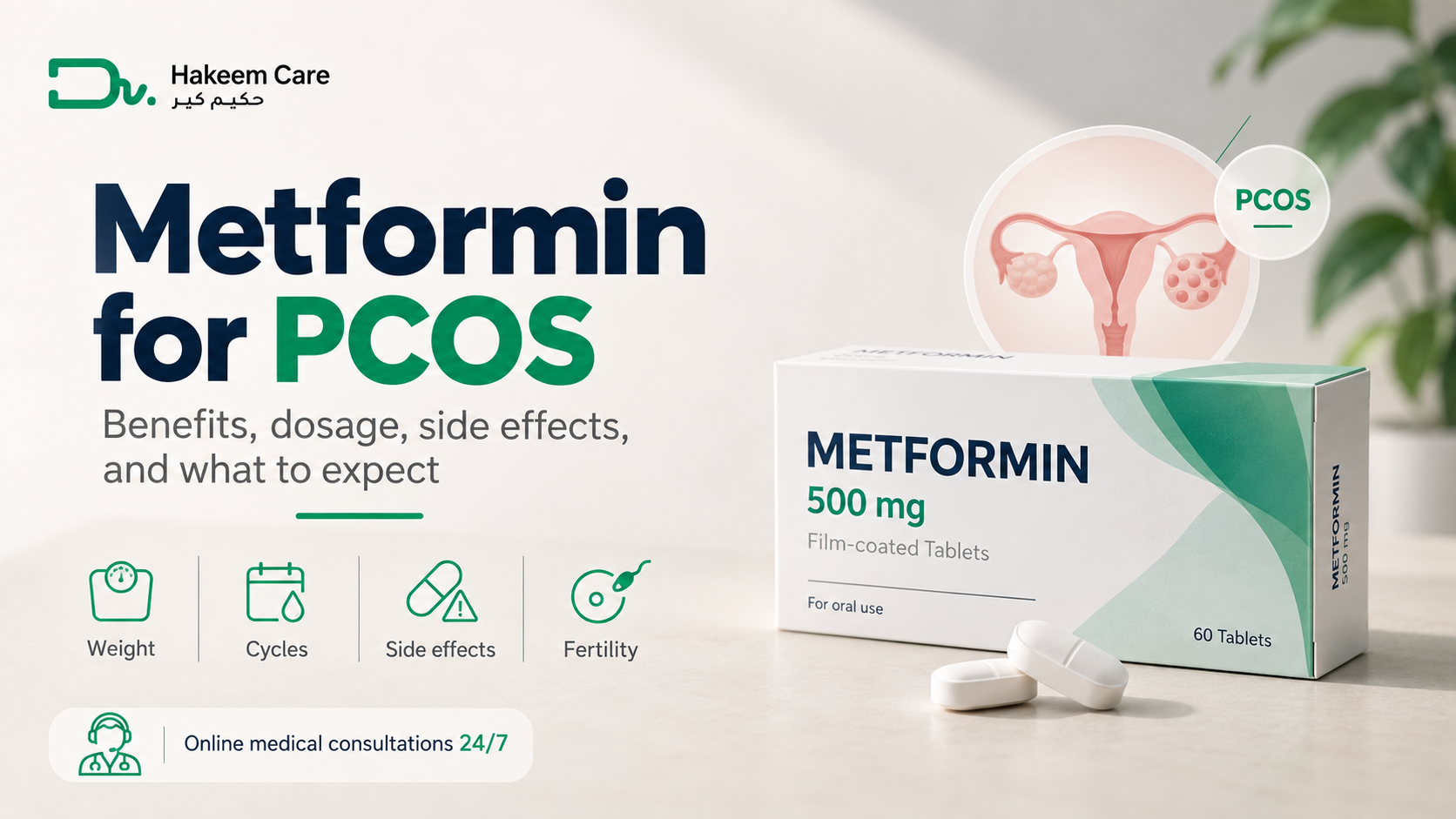
Metformin is often prescribed to people with polycystic ovary syndrome (PCOS), particularly when insulin resistance or other metabolic concerns are part of the condition.
Its main role is not to “cure” PCOS or produce rapid weight loss. Metformin improves the body’s response to insulin and can help with metabolic health. In some people, it may also support more regular menstrual cycles and ovulation.
Current international guidance particularly recommends considering metformin in adults with PCOS who have a BMI of 25 kg/m² or higher for outcomes including insulin resistance, glucose levels and lipid profiles. It may also be considered for adults below that BMI, although evidence is more limited.
PCOS was officially renamed Polyendocrine Metabolic Ovarian Syndrome (PMOS) by the international PCOS network in May 2026. Because PCOS remains the term most patients know and search for, we use it throughout this guide.
Table of Contents
Metformin for PCOS at a glance
| Question | Short answer |
|---|---|
| Does metformin help PCOS? | Yes, particularly when metabolic problems or insulin resistance are important treatment targets. |
| Does it cause weight loss? | It may contribute to modest weight reduction, but it is not primarily a weight-loss medication. |
| Can it regulate periods? | It may help some people, particularly where metabolic dysfunction contributes to irregular cycles. |
| Does it improve fertility? | It can improve ovulation and fertility in some cases, but more effective ovulation-induction medications are available. |
| Is it the first-choice fertility drug? | No. Letrozole is currently recommended first-line for many women with anovulatory PCOS infertility. |
| How quickly does it work? | Side effects may appear within days, while metabolic or menstrual benefits generally take longer and vary between patients. |
| Can it be taken long-term? | It can be used long-term when still indicated, with periodic reassessment and attention to issues such as vitamin B12. |
| Should you start it yourself? | No. Metformin is a prescription medicine and suitability and dose should be determined by a clinician. |
How does metformin help PCOS?
Metformin was originally developed to treat type 2 diabetes. It lowers glucose production by the liver and improves the body’s sensitivity to insulin.
That matters in PCOS because insulin resistance is common.
When the body’s cells become less responsive to insulin, the pancreas may produce more of it. High insulin levels can interact with the hormonal abnormalities involved in PCOS and contribute to metabolic and reproductive problems.
Improving insulin sensitivity may therefore help address part of the underlying metabolic picture rather than simply treating one visible symptom.
Metformin may improve:
- Insulin resistance
- Blood glucose regulation
- Some lipid measures
- Weight or BMI to a modest degree
- Menstrual regularity in some patients
- Ovulation in some patients
The evidence for metabolic outcomes is strongest in people at higher metabolic risk.
Who benefits most from metformin for PCOS?
Metformin is not automatically necessary for everyone diagnosed with PCOS.
According to the international evidence-based guideline, metformin should particularly be considered in adults with PCOS and a BMI of at least 25 kg/m² for metabolic and anthropometric outcomes. Treatment may also be considered below this BMI, but evidence is more limited.
A doctor may be more likely to discuss metformin when PCOS is accompanied by concerns such as:
- Insulin resistance
- Impaired glucose tolerance
- Higher risk of type 2 diabetes
- Higher BMI
- Metabolic abnormalities
- Irregular menstrual cycles when some other treatments are unsuitable or not tolerated
If the main concern is hirsutism or irregular cycles, combined oral contraceptive pills may be preferred in appropriate patients. Metformin is generally favored over contraceptive pills when the main reason for treatment is metabolic.
This is why asking simply, “Is metformin good for PCOS?” is less useful than asking:
“What part of my PCOS are we trying to treat?”
Does metformin help with PCOS weight loss?
Metformin can contribute to weight reduction in some people with PCOS, but the average effect is modest and it should not be viewed as a dedicated weight-loss medication.
A systematic review and meta-analysis used in developing the international PCOS guideline found that metformin produced a modest improvement in BMI compared with placebo, while also improving measures of insulin resistance and fasting glucose.
Some people notice that appetite changes or improved metabolic control make weight management easier. Others experience little or no change in their weight.
What matters most is that metformin can have metabolic benefits even when the number on the scale changes only slightly.
Lifestyle management also remains an important part of PCOS treatment. The international guideline specifically recommends shared decision-making around lifestyle intervention and metformin rather than presenting medication as a replacement for nutrition, movement or other healthy behaviors.
Can your doctor prescribe a higher metformin dose just for faster weight loss?
Metformin doses should not be increased simply to accelerate weight loss.
Dose changes should be based on tolerability, treatment goals, formulation, kidney function and the clinician’s assessment.
What is the usual metformin dosage for PCOS?
There is no single correct metformin dose for every person with PCOS.
The international guideline recommends starting with a low dose and increasing gradually, often in increments of 500 mg every one to two weeks. Gradual increases can reduce gastrointestinal side effects.
The guideline lists a suggested maximum daily dose of 2.5 g in adults, but individual metformin products may have different licensed maximum doses and dosing schedules.
Some people use immediate-release tablets several times during the day. Others are prescribed an extended-release formulation.
The correct regimen depends on factors such as:
- Why metformin is being prescribed
- Your response to treatment
- Side effects
- Kidney function
- Other medicines
- The specific metformin formulation
Do not copy another person’s dose or increase your own dose to improve weight loss or fertility.
What should you expect when starting metformin for PCOS?
The first changes you notice may not be the benefits you are hoping for.
For many people, the first noticeable effect is gastrointestinal discomfort.
During the first days or weeks, you may experience:
- Nausea
- Diarrhea
- Abdominal discomfort
- Reduced appetite
- Changes in taste
These side effects frequently improve as the body adjusts. Saudi Food and Drug Authority information also advises taking metformin with or immediately after food to help reduce gastrointestinal symptoms.
Starting with a lower dose, gradually increasing it and using extended-release metformin where appropriate may also improve tolerability.
Changes in periods, ovulation or metabolic markers generally require more time and vary considerably between individuals.
Metformin is not a medication where most people can judge success after a few days.
How long does metformin take to work for PCOS?
There is no universal timeline.
Metformin begins affecting glucose metabolism relatively quickly, but PCOS outcomes such as menstrual regularity, ovulation, metabolic markers or weight can take weeks or months to assess properly.
Your doctor may judge progress using a combination of:
- Menstrual cycle pattern
- Symptoms
- Body weight or waist measurements when relevant
- Glucose testing
- Lipid testing
- Other metabolic markers
- Fertility outcomes, if pregnancy is the goal
The treatment should be assessed according to its intended purpose rather than expecting one particular symptom to change.
How long should you take metformin for PCOS?
There is no fixed rule such as “three months” or “six months” that applies to everyone.
The international PCOS guideline notes that metformin appears safe for long-term use based on experience in other populations, but clinicians should periodically reconsider whether there is still an indication to continue it.
Someone taking it primarily for metabolic risk may have a very different treatment duration from someone using it as one part of fertility management.
Do not stop long-term metformin simply because your menstrual cycle improves without discussing the reason it was prescribed with your doctor.
What are the side effects of metformin for PCOS?
The most common side effects involve the digestive system.
These include:
- Nausea
- Diarrhea
- Abdominal pain
- Vomiting
- Reduced appetite
- Changes in taste
They are often strongest when treatment begins or when the dose is increased. Taking metformin with food can help.
Metformin and vitamin B12
Long-term metformin use can be associated with lower vitamin B12 levels.
The PCOS guideline recommends considering B12 monitoring particularly in people who already have risk factors for deficiency, including those following a vegan diet, people with diabetes, people with pernicious anemia or those who have undergone bariatric/metabolic surgery.
Tell your doctor if you develop unexplained symptoms such as persistent fatigue, numbness or tingling, particularly during long-term treatment.
Is lactic acidosis a risk?
Lactic acidosis is a rare but serious complication associated with metformin.
Risk is higher in certain situations, including significant kidney problems and severe illness. Both Saudi SFDA and NHS information warn about this complication.
Seek urgent medical care if you develop severe illness while taking metformin or symptoms such as major breathing difficulty, severe weakness, persistent vomiting or other concerning symptoms.
Foods to avoid when taking metformin for PCOS
There is no standard list of foods that everyone must avoid while taking metformin.
Most people can eat normally. NHS guidance specifically states that normal food can be eaten while using metformin.
The more useful advice is to:
- Take metformin with food if instructed, particularly to reduce nausea or diarrhea.
- Follow a balanced eating pattern appropriate for your metabolic health and PCOS.
- Avoid treating certain foods as “forbidden” simply because you take metformin.
There is also no evidence-based “metformin PCOS diet” that works for everyone.
What about alcohol?
Excess alcohol should be avoided because it can increase the risk of serious metformin-related complications. NHS guidance recommends limiting alcohol while taking metformin.
If you drink alcohol, ask your doctor or pharmacist what amount is appropriate for your health circumstances.
Does metformin regulate periods?
It can help some people.
By improving metabolic and insulin-related abnormalities, metformin may indirectly improve menstrual regularity and ovulation.
However, it is not necessarily the best treatment when irregular periods are the only concern.
Current PCOS guidance suggests that combined oral contraceptive pills may be preferred for managing irregular cycles and hirsutism in appropriate patients, while metformin may be considered when contraceptive pills are contraindicated, not accepted or not tolerated.
Treatment therefore depends on whether the goal is:
- Regular bleeding
- Contraception
- Metabolic health
- Fertility
- Acne or excessive hair growth
- Several of these at once
Does metformin help fertility in PCOS?
Metformin can improve ovulation and pregnancy outcomes in some women with PCOS, but it is not generally the most effective first-line fertility medication.
The international guideline states that metformin can be used alone in women with PCOS and anovulatory infertility to improve clinical pregnancy and live-birth rates, but patients should be told that more effective ovulation-induction medications are available.
For women with anovulatory infertility and no other infertility factors, letrozole is currently recommended as the first-line pharmacological treatment for ovulation induction.
So if pregnancy is your main goal, the question should not simply be:
“Should I take metformin?”
It should be:
“What fertility treatment fits my cause of infertility, ovulation pattern and other fertility factors?”
Can you get pregnant while taking metformin?
Yes.
Some people who were not ovulating regularly may begin ovulating more consistently as their PCOS management improves.
If pregnancy is not your goal, discuss contraception with your doctor rather than assuming irregular periods mean you cannot become pregnant.
If pregnancy is your goal, tell your doctor before starting treatment so metformin can be considered within a broader fertility plan.
Should you continue metformin if you become pregnant?
Do not automatically stop or continue metformin without discussing it with the clinician managing your pregnancy.
The international guideline states that metformin in pregnant women with PCOS has not been shown to prevent gestational diabetes, late miscarriage, pregnancy hypertension, pre-eclampsia or having a baby with macrosomia. It may be considered in selected circumstances, but that decision is individualized.
If you have a positive pregnancy test while taking metformin, contact your treating doctor for advice.
How much does metformin cost in Saudi Arabia?
There is no single price for “metformin” because prices depend on the brand, strength and pack size.
As an example, current Saudi Food and Drug Authority listings checked in September 2026 include:
- Glucophage 500 mg, 60 tablets: SAR 19.85
- Glymet 500 mg, 50 tablets: SAR 6.65
These are examples from the SFDA drug registry rather than a guarantee of what every pharmacy will charge or currently stock.
Because prices and availability can change, check the latest SFDA listing or your pharmacy rather than relying on an old article price.
Is metformin approved specifically for PCOS?
This point can be confusing.
Metformin has a long history of evidence-based use in PCOS, but international guidelines describe its use specifically for PCOS as off-label in many settings.
The Saudi SFDA consumer information page for metformin currently lists type 2 diabetes as its indicated use and does not list PCOS on that page.
“Off-label” does not mean a treatment is automatically inappropriate or experimental. It means the medicine is being prescribed for a purpose outside the specific indication on its regulatory authorization.
Your Saudi physician or pharmacist can explain how this applies to the product you have been prescribed.
Metformin vs birth control pills for PCOS
Neither treatment is universally “better.”
They target different priorities.
| Treatment goal | Metformin | Combined oral contraceptive pill |
|---|---|---|
| Insulin resistance/metabolic health | Often useful | Not the main purpose |
| Irregular periods | May help | Often effective |
| Hirsutism | Limited role | Often preferred |
| Contraception | No | Yes |
| Ovulation/fertility | May support ovulation | Prevents pregnancy while being used |
| Weight-loss treatment | Not primarily | Not primarily |
Current international guidance favors metformin over combined oral contraceptive pills for metabolic indications, while contraceptive pills may be favored for irregular cycles or hirsutism when appropriate.
Do you need metformin if you have PCOS but no insulin resistance?
Not necessarily.
A PCOS diagnosis by itself does not automatically mean metformin is required.
The decision should consider your:
- Metabolic risk
- BMI and body composition
- Blood glucose
- Menstrual pattern
- Pregnancy plans
- Cardiovascular risk factors
- Symptoms
- Preferences
- Response to lifestyle interventions
- Other treatments
Metformin can still be considered in some adults with BMI below 25 kg/m², but international guidance notes that evidence is more limited in this group.
When should you speak with a doctor about metformin for PCOS?
Consider discussing treatment with a doctor if you have PCOS and:
- Your menstrual cycles remain very irregular
- You have been told you have insulin resistance, prediabetes or another metabolic concern
- Weight management remains difficult despite appropriate lifestyle measures
- You are trying to become pregnant
- You experience significant side effects from metformin
- You are unsure whether your current dose is appropriate
- You become pregnant while taking metformin
- You have kidney or liver disease
- You are taking several other medicines
- You have symptoms that could suggest vitamin B12 deficiency
Treatment should match the specific problem you are trying to solve.
Hakeem Care’s online consultation service allows you to discuss your PCOS symptoms, current medications, test results and treatment goals with a doctor remotely before making changes to prescription medication.
Frequently asked questions about metformin for PCOS
Can metformin cure PCOS?
No. Metformin does not cure PCOS. It is one treatment that can help manage certain metabolic and reproductive features of the condition.
Does metformin reduce belly fat in PCOS?
Metformin may contribute to modest improvements in weight and metabolic health, but it does not specifically target abdominal fat.
Will 500 mg of metformin help with PCOS?
500 mg is commonly used as part of the starting or titration process, but whether that dose is appropriate or sufficient depends on the individual, the formulation and the reason for treatment.
Can I take metformin if I am not diabetic?
Yes, doctors may prescribe metformin to people with PCOS who do not have diabetes.
Its use in PCOS is based on its effects on insulin sensitivity and metabolic health rather than requiring a diabetes diagnosis. International PCOS guidelines specifically address metformin use in this population.
Is metformin better in the morning or at night?
Timing depends on whether you use immediate-release or extended-release metformin and on your prescribed schedule.
What happens if I stop metformin?
Metabolic markers, menstrual irregularity or other features of PCOS may change again if the underlying condition remains. Discuss stopping treatment with the prescribing clinician so they can decide whether monitoring or another treatment is needed.
The bottom line
Metformin can be a useful treatment for PCOS, but its benefits are often misunderstood.
It is most strongly supported for metabolic concerns such as insulin resistance and glucose-related risk, especially in adults at higher metabolic risk. It may also improve menstrual cycles or ovulation in some patients.
What it is not is a guaranteed weight-loss medication, a cure for PCOS or the best fertility treatment for every woman.
The right question is not simply whether metformin “works.”
It is whether metformin targets the particular part of PCOS that needs treatment in your case.
If you have been prescribed metformin, are considering it, or are experiencing side effects, you can book an online consultation with a Hakeem Care doctor to review your symptoms, medical history, current treatment and next steps.