
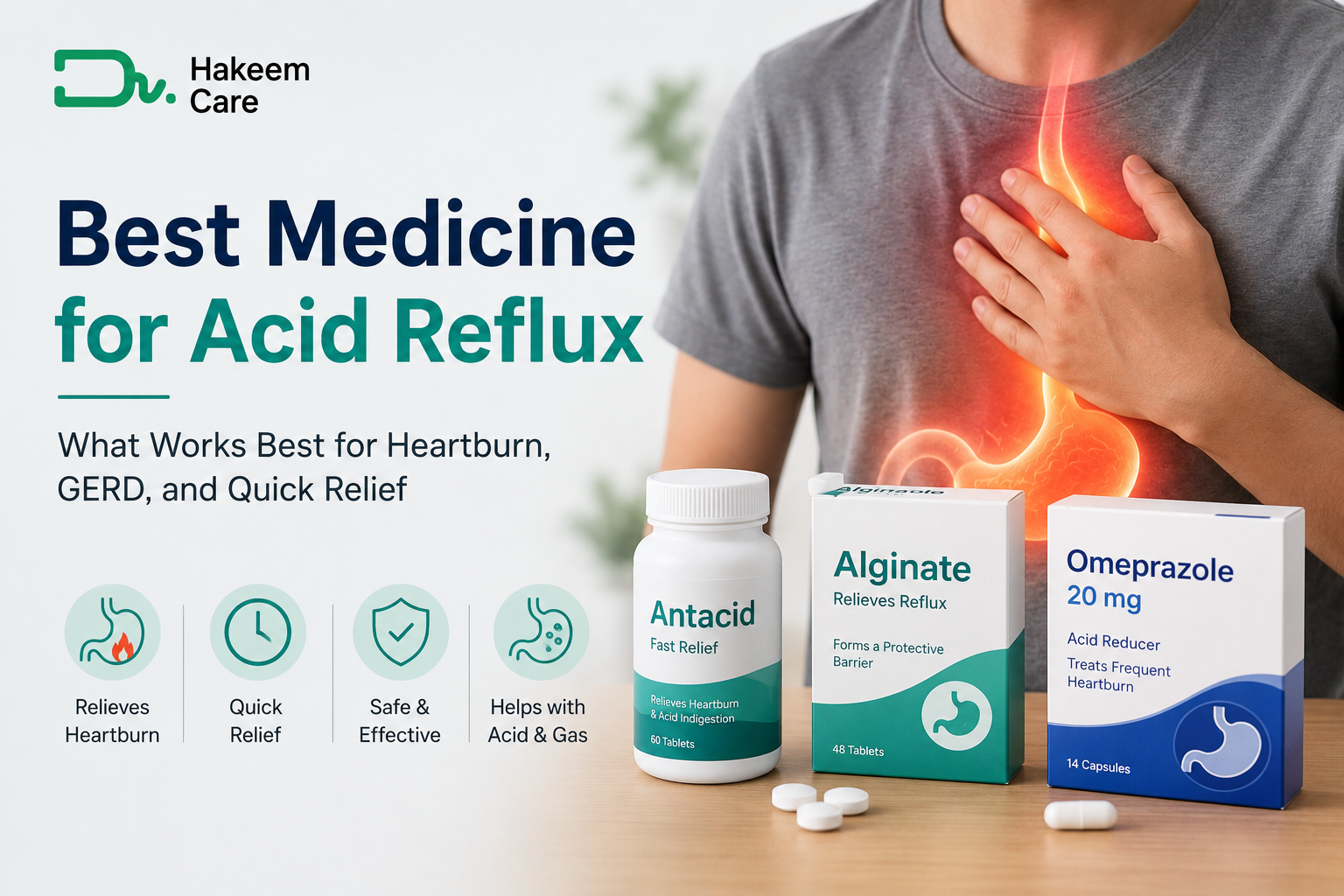
If you have ever felt that uncomfortable burning sensation creeping from your stomach toward your chest or throat, you probably know how distracting acid reflux can be.
It can happen after a heavy meal, when you lie down at night, or sometimes seemingly out of nowhere.
One of the most common questions I hear from patients is: “What is the best medicine for acid reflux?”
The answer is a little more nuanced than simply naming one medication. The best treatment depends on how often your symptoms happen, how severe they are, whether you also have gas or bloating, and whether you are dealing with occasional heartburn or ongoing gastroesophageal reflux disease (GERD).
As a doctor, I would much rather help you find the right treatment for your symptoms than simply recommend the strongest medication available.
Table of Contents
What is acid reflux?
Acid reflux occurs when stomach contents, including stomach acid, move upward into the esophagus.
This can cause the familiar burning sensation in the chest known as heartburn, as well as a sour or acidic taste in the mouth.
You may also notice:
- A burning sensation in your throat or chest
- A sour taste in your mouth
- Food or liquid coming back up
- Bloating or nausea
- Frequent burping
- A persistent cough or hoarse voice
- Symptoms that become worse after eating or when lying down
Having reflux occasionally is common. But if you experience it frequently, particularly on most days, it may be GERD and deserves proper medical evaluation.
Read more on How to Prepare for Blood Tests: Complete Guide in 2026
What is the best medicine for acid reflux?
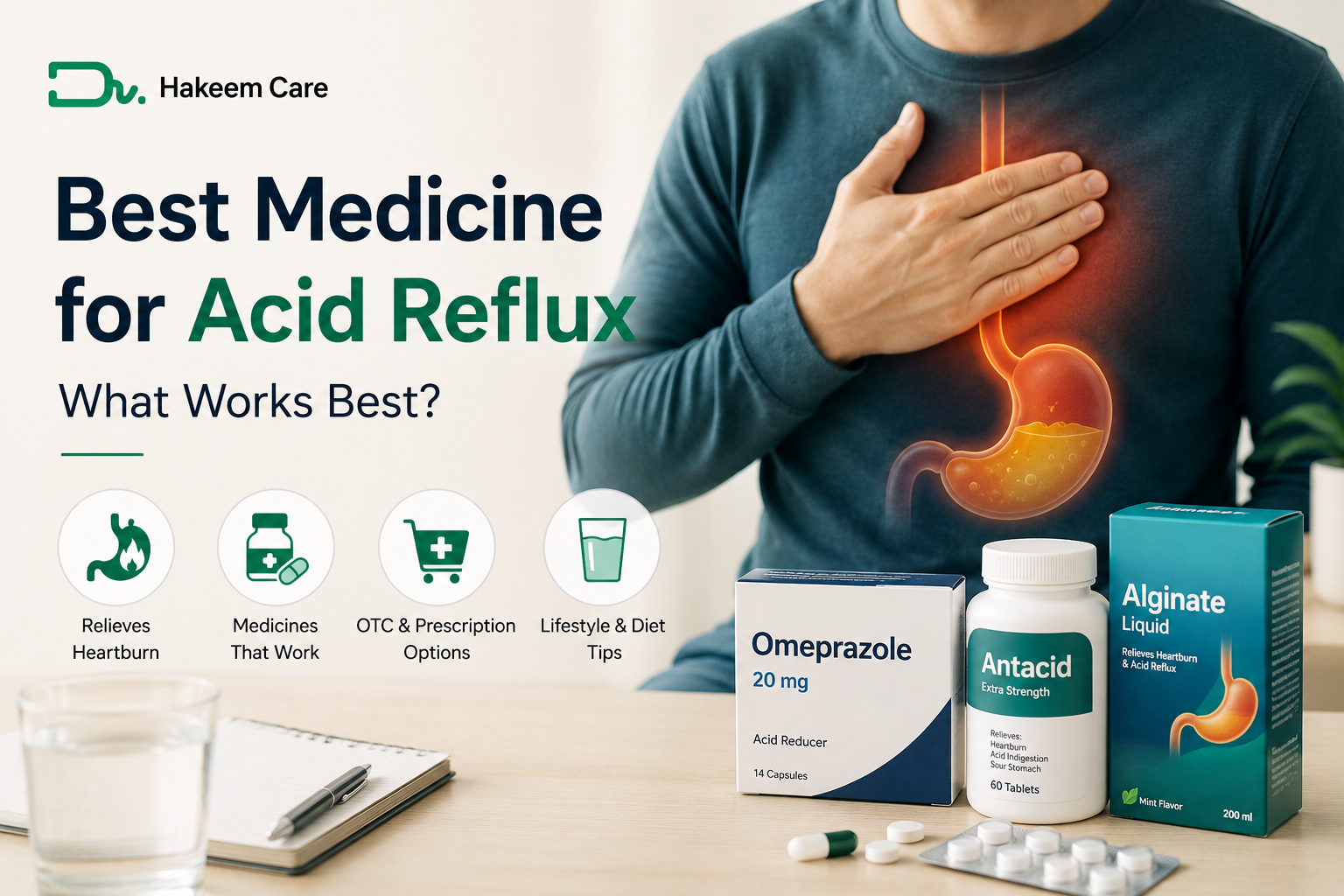
The best medicine depends on how often you experience reflux and how severe your symptoms are.
For occasional heartburn, antacids or alginates can provide relatively quick relief, while proton pump inhibitors (PPIs) such as omeprazole are commonly used when symptoms are frequent or related to GERD.
Here is how I usually explain the main options to patients.
1. Antacids: good for occasional, quick relief
Antacids work by neutralizing stomach acid and can relieve heartburn relatively quickly. They are available without a prescription and are generally useful when symptoms happen occasionally rather than every day.
The important thing to remember is that antacids treat the symptom rather than the underlying cause. If you find yourself taking them regularly, it is worth talking to a doctor rather than simply continuing to reach for another dose.
2. Alginates: particularly useful for reflux
Alginates work a little differently. They form a protective layer over the stomach contents, helping reduce the amount of acid that travels back into the esophagus.
This is why products containing an alginate, such as Gaviscon, can be particularly helpful when the main problem is reflux itself. They usually start working relatively quickly and can be useful for short-term symptom relief.
3. Proton pump inhibitors (PPIs): for frequent reflux
If heartburn is happening regularly, a doctor may recommend a proton pump inhibitor (PPI) such as omeprazole or lansoprazole.
PPIs reduce the amount of acid produced by your stomach and are commonly used when reflux symptoms are persistent or when there is inflammation or damage to the esophagus.
This is where I would caution against thinking that “stronger means better.” A PPI may be the right choice for someone with frequent GERD, but it is not necessarily what you need for one episode of heartburn after a large meal.
4. H2 blockers
H2 receptor antagonists, such as famotidine, reduce stomach acid through a different mechanism. They may be considered when a PPI is not suitable or has not provided enough relief.
Your doctor can help decide which type of medication makes the most sense based on your symptoms and medical history.
Read more on Best Tests for Diabetes Diagnosis: Complete Guide
What is the best medicine for acid reflux and gas?
If you have both acid reflux and gas, choosing a medication can be a little more complicated because the two symptoms do not necessarily have the same cause.
Some antacid products also contain simethicone, which can help relieve trapped gas and flatulence.
However, I would not automatically assume that your bloating or gas is caused by excess stomach acid.
Eating quickly, swallowing air, constipation, certain foods, food intolerances, and other digestive conditions can all contribute to gas and bloating.
So if you regularly have both reflux and significant bloating, it is worth looking at the pattern of your symptoms rather than simply adding more medication.
Learn more on Metformin for Weight Loss: Does It Really Work?
What is the best medicine for acid reflux and gas over the counter?
For occasional symptoms, an over-the-counter antacid or an alginate-containing product may be a reasonable option.
Some products combine an antacid or alginate with simethicone to address both reflux and gas.
But there is an important distinction between occasional symptoms and symptoms that keep coming back.
If you need over-the-counter medication frequently, the goal should not be to find a stronger product to take indefinitely.
You may actually need to determine why the reflux keeps happening and whether you have GERD.
Learn more on Ozempic vs Mounjaro: Which Is Better for Weight Loss?
What is the best medicine for acid reflux in the throat over the counter?
Acid reflux does not always feel like traditional heartburn.
Some people mainly experience irritation in the throat, a sour taste, coughing, or hoarseness. Reflux can reach the throat and cause these symptoms, but persistent throat symptoms can also have other causes.
For occasional reflux symptoms, antacids and alginates may provide short-term relief.
If your throat symptoms keep returning, however, I would not recommend treating yourself indefinitely.
Persistent cough, hoarseness, difficulty swallowing, or the sensation that food is getting stuck should be evaluated by a healthcare professional.
What can I take to immediately stop acid reflux?
If you need immediate relief for acid reflux, an antacid or alginate is generally more useful for rapid symptom control than a medication that works by reducing acid production over time.
Antacids can work quickly and provide relief for a few hours, while alginate products create a physical barrier that helps prevent reflux from coming back up into the esophagus.
If you are repeatedly needing something for immediate relief, though, that is a sign to step back and look at the bigger picture.
Frequent rescue treatment may mean your reflux is not adequately controlled.
What calms GERD quickly?
For a sudden flare-up, there are a few simple things you can do alongside appropriate medication:
- Avoid lying down immediately after eating.
- Stay upright after meals.
- Avoid eating large meals.
- Identify and reduce foods that consistently trigger your symptoms.
- Avoid eating close to bedtime.
- If you are overweight, gradual weight loss can help reduce reflux.
- If nighttime reflux is a problem, raising the head of your bed can help.
One thing I would not recommend is trying to eliminate half of your diet overnight. Reflux triggers vary from person to person.
What should I drink for acid reflux?
There is no special drink that permanently gets rid of acid reflux.
Plain water is generally a reasonable choice, while some people find that coffee, caffeinated drinks, alcohol, fizzy drinks, or acidic beverages make their symptoms worse.
If you notice that a particular drink reliably triggers your reflux, reducing it is more useful than searching for a “magic” drink that neutralizes your stomach acid.
And although drinking water may help you feel more comfortable, water does not cure GERD.
Which drink reduces acid reflux?
For many people, plain, non-carbonated water is a sensible option when they have reflux. Drinks containing caffeine, alcohol, or carbonation may worsen symptoms in some people, so paying attention to your individual triggers is more useful than following a universal list.
If you regularly wake up with reflux or throat irritation, changing what you drink alone is unlikely to solve the problem.
What foods trigger acid reflux?
There is no single “acid reflux diet” that works perfectly for everyone.
However, some people notice that foods and drinks such as fatty or spicy foods, tomatoes, citrus fruits, chocolate, coffee, alcohol, and fizzy drinks make their symptoms worse.
Rather than eliminating all of these foods automatically, I usually recommend paying attention to patterns.
If you eat something three times and develop reflux each time, that is much more useful information than a generic list on the internet.
What food soaks up acid reflux?
There is no particular food that can simply “soak up” stomach acid and cure acid reflux.
A better approach is to avoid foods that trigger your symptoms, eat smaller meals, and avoid lying down soon after eating. If reflux is frequent, lifestyle changes alone may not be enough and you may need medical treatment.
What will a GP prescribe for acid reflux?
If pharmacy medicines and lifestyle changes are not controlling your symptoms, a doctor may prescribe a proton pump inhibitor (PPI) such as omeprazole or lansoprazole.
The exact treatment and duration depend on the severity and frequency of your symptoms. If a PPI does not help, a doctor may consider an H2 receptor antagonist such as famotidine or investigate whether another condition is causing your symptoms.
In some cases of severe or persistent reflux, additional testing such as a gastroscopy may be recommended.
Can acid reflux be cured permanently?
This is probably one of the questions I hear most often: “Can I get rid of acid reflux permanently?”
Sometimes symptoms can improve dramatically after addressing triggers, changing eating habits, losing excess weight when appropriate, and using the right medication.
But GERD can be a chronic condition, so there is no single treatment that guarantees a permanent cure for everyone.
If your symptoms disappear with treatment and then repeatedly return, that does not necessarily mean you need a stronger medication. It may mean that your treatment plan needs to be reassessed.
How can I get rid of acid reflux permanently?
There is no guaranteed permanent cure for everyone with acid reflux, but many people can achieve excellent long-term control.
The most useful changes are usually surprisingly simple: avoid your personal triggers, don’t eat immediately before bed, maintain a healthy weight if appropriate, stop smoking, limit alcohol, and use medication when it is medically indicated.
If you continue to experience symptoms despite making these changes, that is when I would recommend speaking with a doctor rather than continuing to experiment with different over-the-counter medicines.
How to calm an acid reflux flare-up?
When reflux suddenly flares up, start with the basics: stay upright, avoid another large meal, and avoid foods or drinks that you already know trigger your symptoms.
For occasional symptoms, an antacid or alginate may provide relatively quick relief.
If flare-ups are happening repeatedly, however, the answer is probably not another quick fix. Frequent reflux deserves a proper assessment.
When should you see a doctor about acid reflux?
Occasional heartburn is usually not concerning. But I would recommend getting medical advice if:
- You have heartburn most days.
- Symptoms are not improving with lifestyle changes or pharmacy medicines.
- You have difficulty swallowing.
- Food feels as though it is getting stuck.
- You frequently vomit.
- You are losing weight without trying.
- You have signs of gastrointestinal bleeding.
These symptoms can indicate that something more than simple occasional heartburn is happening.
And if you have new or severe chest pain, particularly with shortness of breath, sweating, fainting, or pain spreading to the arm or jaw, do not assume it is acid reflux. Seek urgent medical assessment.
Frequently Asked Questions
What is the strongest medication for acid reflux?
PPIs such as omeprazole and lansoprazole are generally more effective at suppressing stomach acid than H2 blockers and are commonly used for GERD.
What can I take to immediately stop acid reflux?
Antacids and alginates can provide relatively quick relief from occasional reflux symptoms. They are intended mainly for short-term symptom control rather than long-term treatment.
Which drink reduces acid reflux?
Plain water is generally a reasonable choice. Coffee, alcohol, fizzy drinks, and other individual triggers may worsen symptoms in some people.
What will a GP prescribe for acid reflux?
A doctor may prescribe a PPI such as omeprazole or lansoprazole when reflux is frequent or persistent. If treatment does not work, other medications or further testing may be considered.
What gets rid of acid reflux permanently?
There is no guaranteed permanent cure for everyone. Many people can control reflux very well through lifestyle changes and appropriate treatment, while persistent GERD may require longer-term management.
What calms GERD quickly?
Staying upright after eating, avoiding trigger foods, and using an appropriate antacid or alginate can help during an occasional flare-up.
Does drinking water help acid reflux?
Water may help you feel more comfortable, but it does not cure GERD. If reflux keeps returning, the underlying cause and treatment plan should be considered.
How long can I take acid reflux medicine?
It depends on the medication and why you are taking it. Antacids are generally intended for occasional use, while PPIs may be used for a defined treatment course or longer when medically appropriate.
So, what is the best medicine for acid reflux?
If you want the short answer: there isn’t one “best” medicine for everyone. For occasional heartburn, an antacid or alginate may be enough.
For frequent reflux or GERD, a PPI such as omeprazole may be more appropriate, while other treatments may be considered depending on your symptoms and medical history.
What matters most is not finding the strongest medicine. It is understanding why you’re getting reflux, how often it happens, and what treatment is safest and most effective for you.
If heartburn has become something you simply live with, or you find yourself taking medication regularly just to get through the day, that’s a good point to talk to a doctor.
With Hakeem Care, you can arrange an online medical consultation to discuss your symptoms, current medications, and medical history with a doctor and get advice tailored to your situation.